
Tackling variability in complex wastewater streams
Industrial wastewater streams are often highly variable and difficult to treat. Understanding how membrane processes respond to changing compositions, fouling behaviour, and operating conditions is essential, but also proves to be challenging to capture in a controlled and repeatable way.
Standard lab setups typically lack flexibility and precision to:
- Systematically test different membrane technologies
- Accurately control process conditions
- Generate reliable data for scale-up
Creating uncertainty when translating lab findings into robust full-scale solutions.
a flexible platform for membrane process insight.
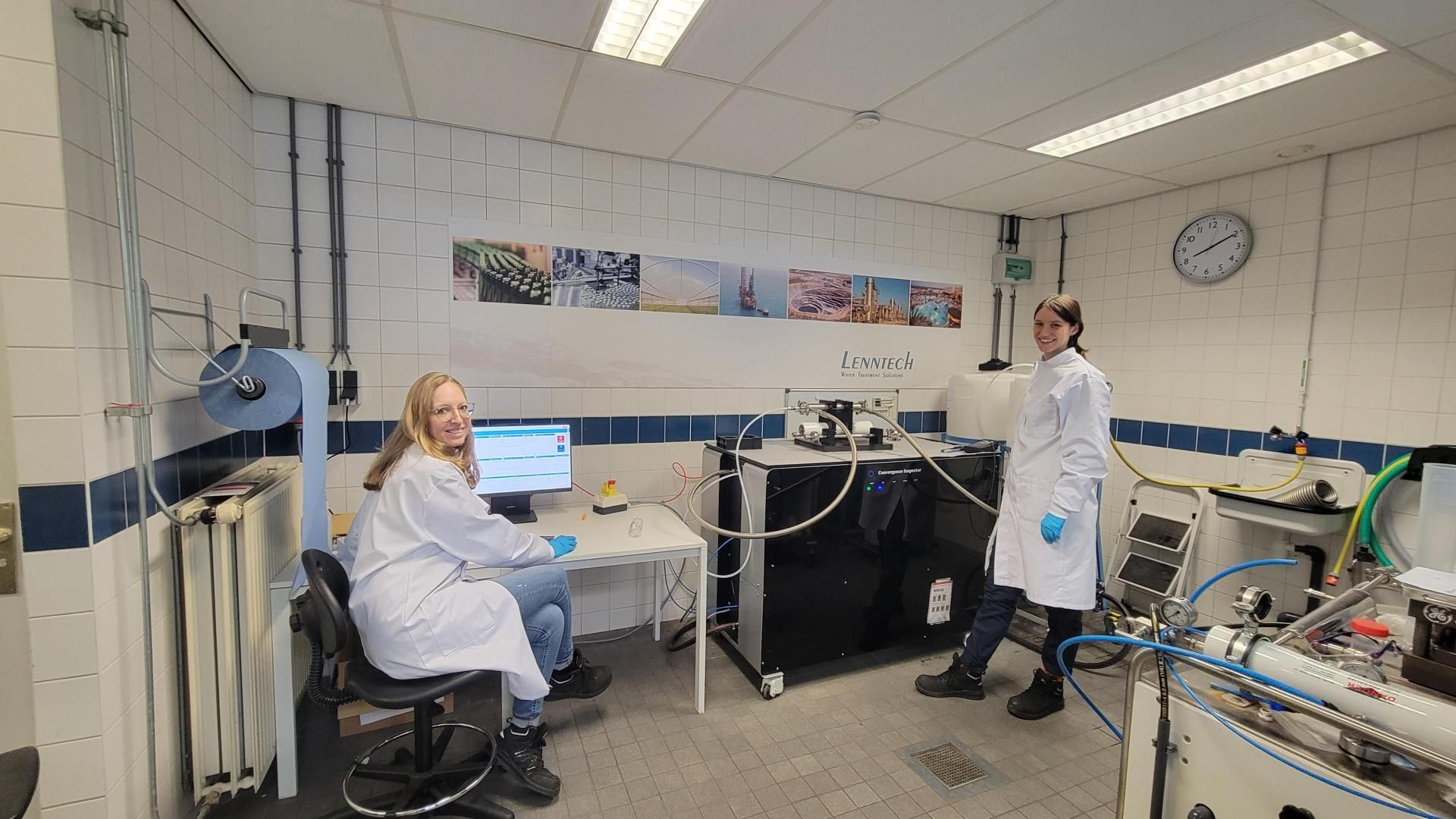
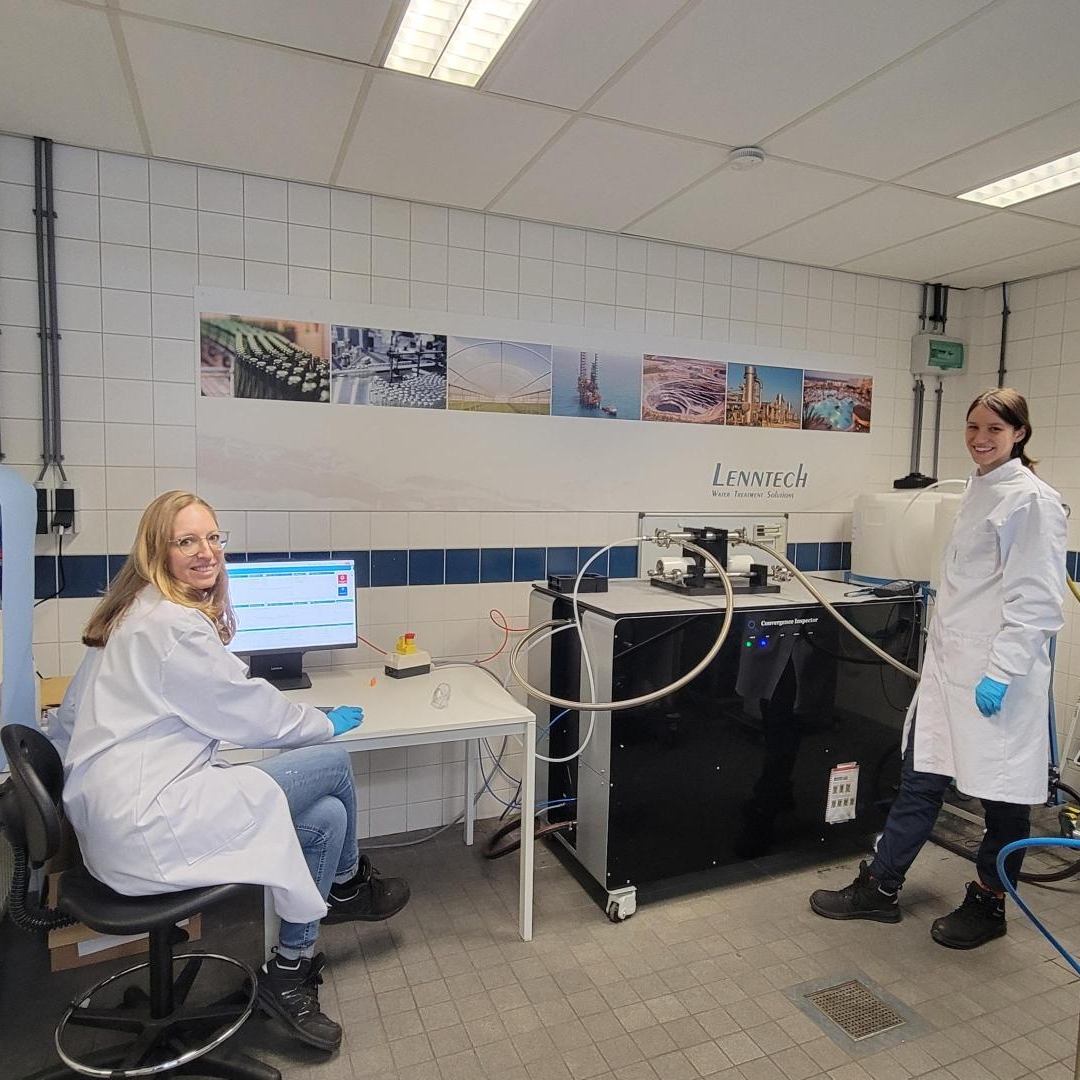
To address this challenge, Lenntech introduced a customised Demcon inspector system into its laboratory in 2025.
The system enables controlled experimentation with pressure-driven membrane technologies such as:
- Ultrafiltration (UF)
- Nanofiltration (NF)
- Reverse osmosis (RO)
With the Demcon inspector, Lenntech can precisely vary operating conditions and directly observe their impact on membrane behaviour and performance. This provides a powerful platform to:
- Compare technologies under identical conditions
- Understand fouling mechanisms
- Evaluate cleaning strategies
- Optimise process parameters
from detailed measurements to robust system design.
The ability to generate high-quality, reproducible data significantly strengthens Lenntech’s development process. The system has already been used to test challenging industrial wastewater streams, including oil–water mixtures.
These experiments have enabled:
- Detailed insight into membrane behaviour under realistic conditions
- Identification of optimal operating windows
- Development of effective cleaning approaches
As a result, Lenntech can define process settings that support stable and efficient operation, reducing risk in scale-up and implementation.

accelerating reliable water treatment innovation
By combining Lenntech’s application expertise with the flexibility of the Demcon inspector, laboratory insights can be translated more confidently into real-world systems.
This accelerates the development of reliable treatment solutions for complex water challenges. Creating support for more efficient industrial processes and a more sustainable use of water resources.